Storm and Hail Damage Roofs in Columbus, GA
Tornadoes, straight-line wind and falling pines cause most storm harm to roofs in Columbus, GA, with hail turning up now and then in spring. If a storm has you uneasy, we connect you with one independent local roofer who can inspect the roof, photograph any damage and write an estimate. We never handle insurance claims.
Prefer to talk? Call now(706) 555-0147Not sure if we cover your area? Check now ↓
Free Inspection Request
Takes 30 seconds, or call (706) 555-0147
Your request goes to one independent roofer who covers Columbus, and that roofer gets in touch with you. See our Referral Marketing Disclosure.
Wind and Hail: What to Check
The National Weather Service office in Peachtree City has surveyed several tornadoes in Muscogee County. In April 2025 it rated one an EF1, peak winds near 90 mph, on a 2.62-mile path a few miles northeast of downtown.
The strongest recent case came in March 2019, when a long-track tornado crossed the Chattahoochee from Alabama and was rated EF-3, near 140 mph, on its 42-mile Georgia run. Weaker storms count too: that April an EF-0 pulled metal panels off a midtown warehouse roof, and a second left minor shingle damage on homes. In 2007 an EF2 crossed northwest Columbus.
Spring storms occasionally bring hail to the Chattahoochee Valley, but wind and falling trees usually do more harm. Check from the ground, never from a wet roof.
- A limb landed on the roof. Even if it rolled off, a branch can crack shingles or punch into decking.
- Shingles are missing or creased. Gusts break the seal strip, and a creased tab lets water in long after the storm.
- Metal or flashing is peeled back. Bent panel edges, a lifted ridge cap or loose flashing at a chimney.
- Metal trim shows dents. Round dings on gutters or vent caps hint that shingles took hits too.
- A new stain appears indoors. Fresh ceiling marks or damp attic insulation after heavy rain.
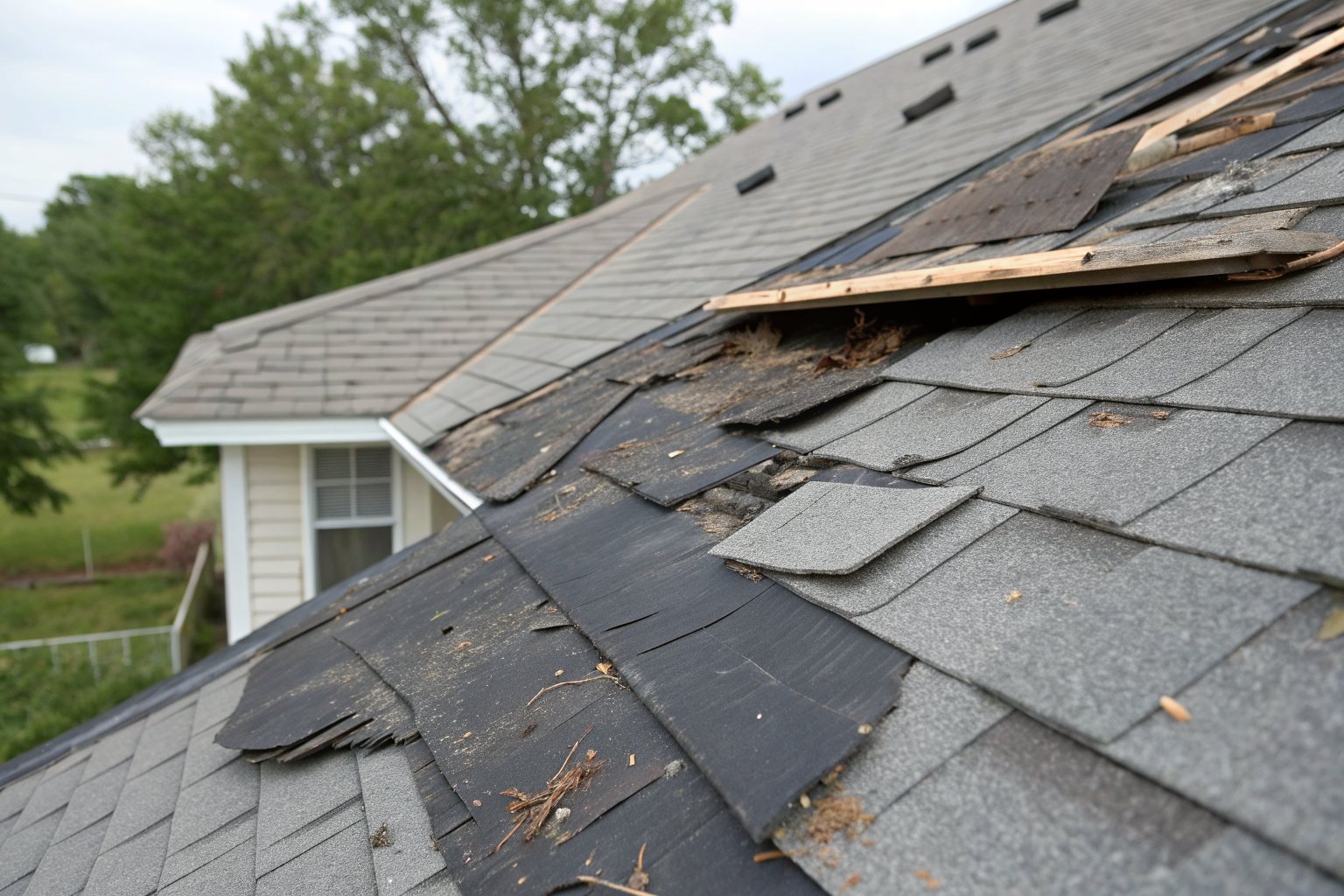
Where Storm Damage Repair Fits
- A temporary cover. If water is getting in, a roofer can tarp the opening. Keep the receipt.
- A damage record. Dated photos and notes on each slope, yours to share with your insurer.
- A written estimate. A line-by-line scope for the repair or replacement recommended.
What Storm Damage Repair Typically Costs
Storm work can mean one section or the whole roof. These full-replacement rows mix two 2024 estimates for Columbus, GA with statewide figures from 2025 and 2026.
| Cost row | Figure | Source (year) |
|---|---|---|
| Columbus, GA asphalt shingles, per sq ft | about $4–$6 | HomeBlue, 2024 |
| Columbus, GA metal roof, per sq ft | about $6–$10 | HomeBlue, 2024 |
| Georgia architectural shingle average, per sq ft | about $5.55 | RoofObservations, 2026 |
| Georgia exposed-fastener metal, per sq ft | about $7.40 | RoofObservations, 2026 |
| Georgia metal roof range, per sq ft | about $7–$15 | Fixr, 2025 |
How the Job Unfolds
- Note what you see. Write down the storm's date and take photos from the ground.
- Ask your insurer how to report it. The report comes from you.
- Request a roofer. Use the form or call (706) 555-0147.
- The roofer inspects and documents, leaving you photos and a written estimate.
- Settle the permit question. Ask Inspections and Code at (706) 225-4126, or have your roofer ask, before work begins.
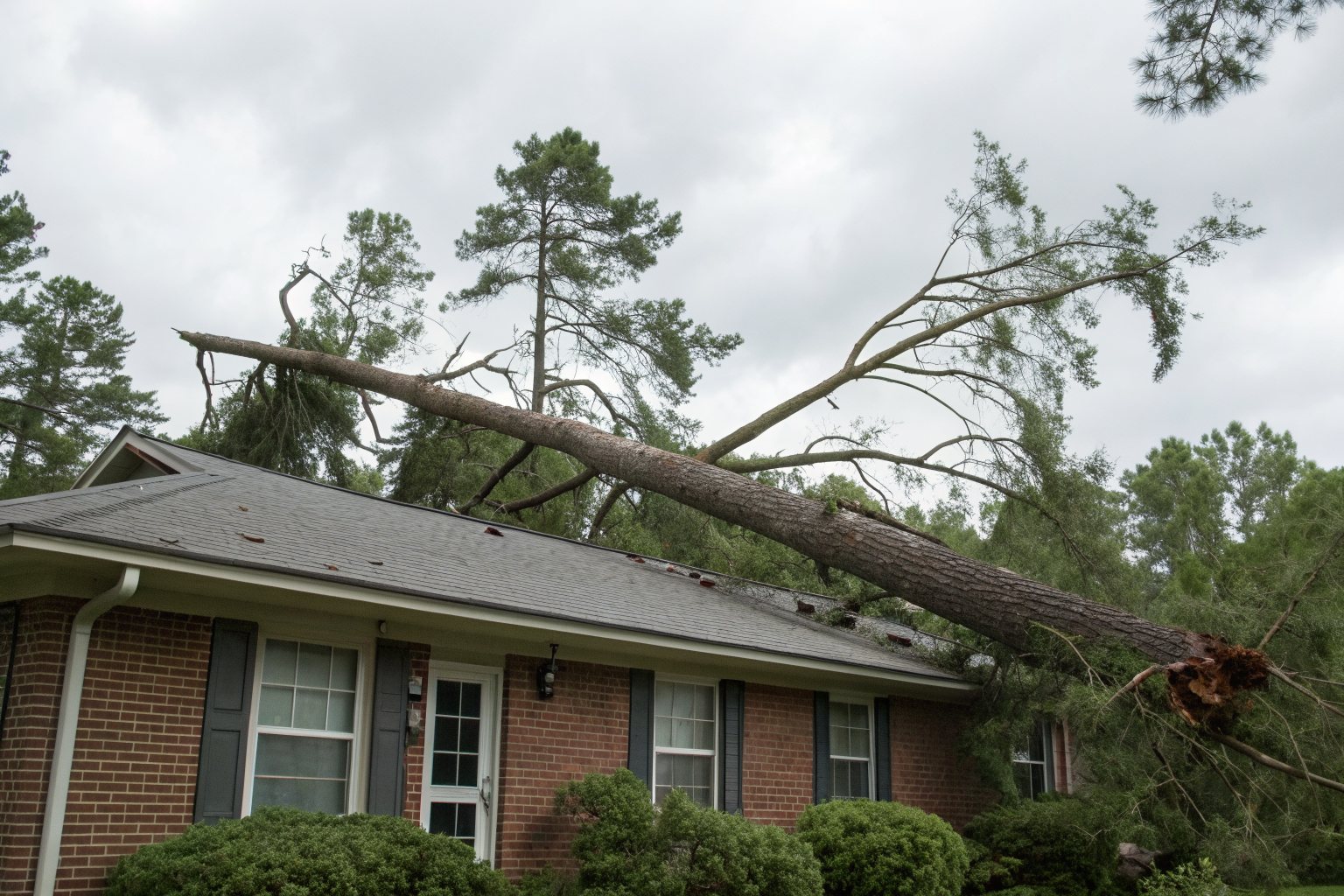
What Your Insurer Will Ask For
Insurers commonly want the storm's date, photos, a description of the damage and sometimes a contractor's estimate. A roofer can supply the photos and estimate, but Georgia law bars a roofer from representing you or negotiating your claim.
Your deductible is yours to pay. The Georgia Attorney General warns that an offer to cover or absorb it is a red flag, and so is a door-to-door pitch right after a storm. Ask any visitor for a business license and a written estimate, and don't pay cash up front.
If insurance is funding the roof and your insurer later says in writing that all or part of the claim isn't covered, you can cancel the roofing contract up to midnight on the fifth business day after that notice reaches you. The roofer can't demand payment in that window, apart from emergency work you agreed to. Details are on the Georgia roofing rules page.
How This Service Helps
Your request goes to one independent roofer, with no pressure to sign. The referral costs you nothing; roofers may pay us for it. Before you commit, ask for the roofer's Columbus business license (or its home county's), insurance certificates, written warranties and local references.
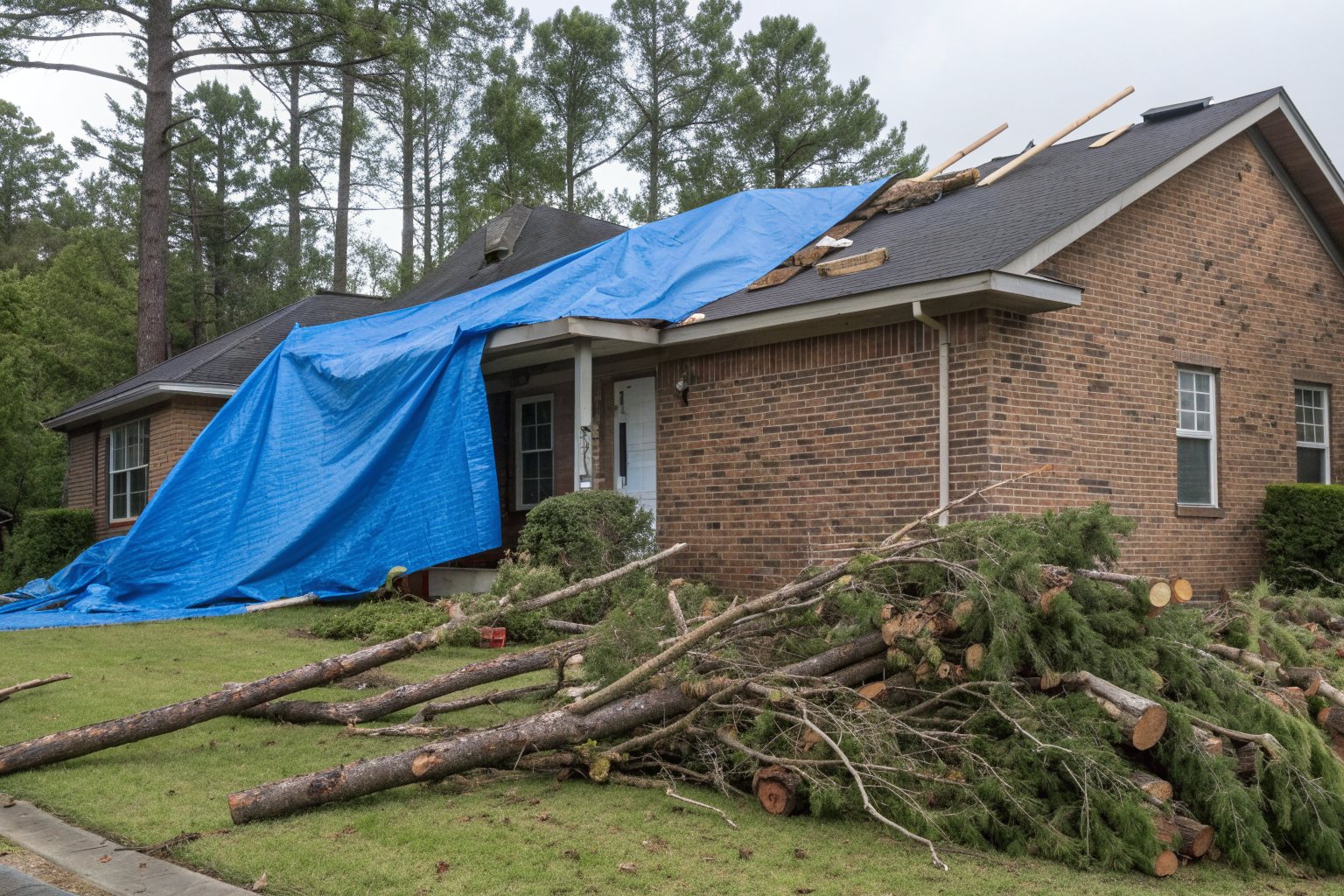
Good to Know
Should I call my insurer or a roofer first?
Either order works, but many homeowners call the insurer first to learn how it wants damage reported. A roofer's photos and estimate then give you a clear record. If water is coming in, a temporary cover shouldn't wait.
Can a roofer deal with my adjuster for me?
No. A roofer's role is the paperwork on the roof itself: photos of the damage and a written estimate you can pass along. Anything about what the policy covers is settled between you and your insurer.
How can I tell hail damage from ordinary wear?
From the ground it's hard; dents in gutters and metal trim are the easiest clue. A roofer can check shingles up close and say whether the pattern fits a storm, though the insurer makes its own decision.
Will a stronger roof help next time?
Class 4 impact-rated shingles and the FORTIFIED standard are options, not requirements. Some insurers lower premiums for them and each sets its own amount, so call your agent before choosing materials.
Other Ways to Fix a Roof
If the damage is limited to one spot, roof repair may cover it; if the roof was already near the end of its life, see full roof replacement. The repair-or-replace quiz gives a quick read.
Book a Hail Damage Inspection
Hail, wind or a fallen limb: the inspection is done by the independent roofer we connect you with, not by us. Send your Muscogee County address and a note about the storm, and that roofer will be in touch.