Georgia Roofing Rules: What Homeowners Should Know
Roof work in Columbus, Georgia runs on a short list of state laws and a handful of local offices. Here is what Georgia says about roofers, insurance-paid contracts and after-storm offers, and who answers permit questions in Muscogee County and nearby towns.
Prefer to talk? Call now(706) 555-0147What Matters Most
Georgia keeps its roofing rules few, so the contract, the insurance certificates and the warranties do most of the protecting. These points are worth knowing before anyone starts tearing shingles off your house.
- No statewide roofing license. Georgia treats roofing as a specialty trade, so you check a roofer's business license, insurance and references instead.
- Five business days after a denial. On an insurance-paid roof, a written denial from your insurer opens a short window to cancel the roofing contract.
- Your deductible stays yours. The Georgia Attorney General lists an offer to cover it as a red flag.
- One permit office for the county. Columbus and Muscogee County share one government, so a single office answers for every address.
- Historic districts add a step. A new roofing material or a different shingle shape needs city staff sign-off first.
This is a summary of public law, not legal advice.
Who Can Legally Roof in GA
There's no statewide roofing license in Georgia; the Secretary of State and the Attorney General treat roofing as a specialty trade. Bigger jobs are the exception. Structural or general construction work can call for a Georgia residential or general contractor license, which you can look up on the Secretary of State's website.
Columbus requires a general business license of every business operating in Columbus and Muscogee County, issued through the Revenue Division at (706) 225-4087. Ask a roofer for its Columbus business license, or its home county's if it's based elsewhere. That check is yours to make; this site doesn't verify anyone's paperwork.
- Insurance certificates. Current general liability and workers' comp, in the roofer's business name.
- An itemized contract. Materials, tear-off, decking allowances, cleanup and the payment schedule, written down before work starts.
- Two warranties on paper. A manufacturer warranty and a separate labor warranty, plus confirmation that the roofer will handle registration of the manufacturer's coverage.
- A Georgia address and references. A local place of business and recent customers you can call.
- Photos of the decking. Once the old roof is off, ask to see pictures of the wood underneath.
Paying Your Own Deductible
The deductible on a homeowners claim is your share, and you pay it. The Georgia Attorney General warns that a contractor offering to pay, cover or absorb it is a red flag. The same warnings flag two other habits: demanding cash only, and asking for the whole price before any work begins.
Treat door-to-door offers right after a storm with care, since the Attorney General lists them among its red flags too. Nothing has to be decided on the porch: take a card, check the business license and insurance, and get a second written estimate.
Your Right to Cancel
Georgia gives homeowners one specific way out of a roofing contract that insurance is paying for. Under O.C.G.A. § 10-1-393.12, if your insurer tells you in writing that all or part of the claim isn't covered, you can cancel the roofing contract. The right lasts through the fifth business day after that notice reaches you, ending at midnight. While the window is open, the roofer can't require payment, apart from emergency work you agreed to.
Keep the insurer's letter clipped to the contract so the dates are easy to show later.
The same statute keeps roofers out of the claim. A roofer can't represent you or bargain with your insurer over the claim unless it holds a public adjuster license, and § 33-23-43.8(k) adds that a contractor can't act in that role on a property it works on. What a roofer can do is document the damage with photos and write an estimate. The claim itself stays between you and your insurance company.
Since July 1, 2025, a contractor working within a year of a Governor-declared disaster can't take control of your insurance payment. That rule came from Senate Bill 201 and now sits in O.C.G.A. § 10-1-393(b)(36). The same law expects that contractor to start work within a set time, meet state codes and hand you written cancellation notices.
Programs That Lower the Cost
Georgia doesn't run a roof-grant program for homeowners, and none turned up for Columbus either. Savings are more likely to come through your insurance policy. Class 4 impact-rated shingles and a FORTIFIED roof are options, not requirements, and many insurers discount premiums when a roof is built stronger. Each company sets its own amount, so call your agent before choosing materials and ask what proof it wants to see.
Checking With the City
The city and county share one government, so every Muscogee County address deals with the same permit office: Columbus Consolidated Government's Inspections and Code, (706) 225-4126, open weekdays 8 a.m. to 5 p.m., with applications through its online Self Service portal. Columbus hasn't published a roofing-specific rule; ask Inspections and Code (or have your roofer ask) before work starts. Structural repairs (rafters, decking framing) are alteration work, which Columbus permits.
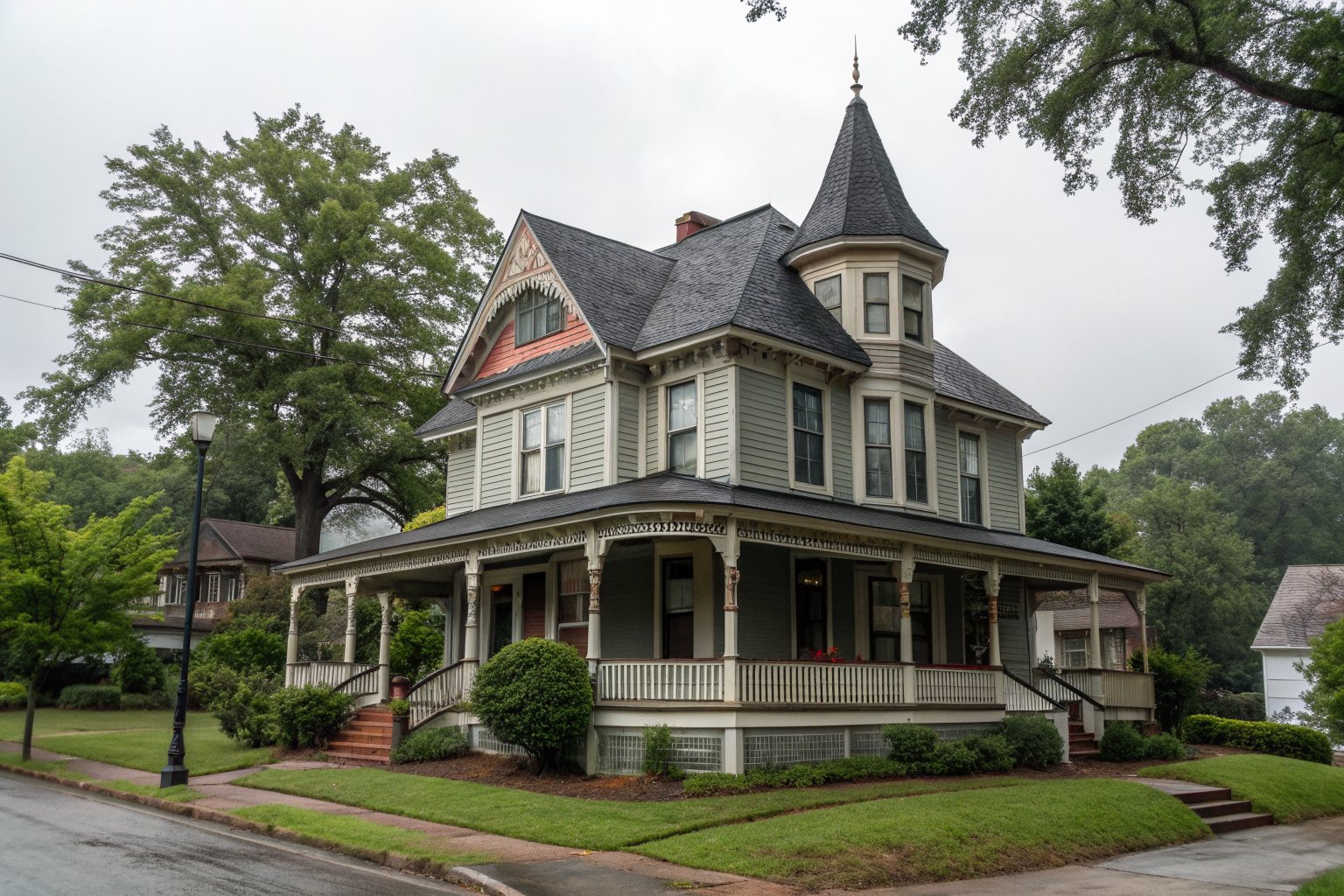
Ten local historic districts add a second check, among them Wynnton Village, Dinglewood, Weracoba-St. Elmo, High Uptown, Waverly Terrace and the Columbus Historic District. The city's Design Guidelines sort roof work into three levels:
- Same materials: no review. A repair that matches what's already there skips historic review.
- New material or shingle shape: staff review. Historic-preservation staff look at it before work starts.
- New roof shape: the Board. Changing the form of the roof goes to the Board of Historic and Architectural Review (BHAR).
A Certificate of Appropriateness covers "any change in materials or appearance" to a designated property, and the guidelines say not to lay a new roof over an existing one. Planning staff take historic-district questions at (706) 225-3941.
Outside Muscogee County, the office depends on where the house sits:
- Fortson, GA. Homes on the Harris County side go to Harris County Community Development, (706) 628-4700, which hasn't stated a re-roof rule. Homes on the Muscogee side of a "Columbus" mailing address use the Columbus office.
- Pine Mountain, GA. The town's own website sends building questions to the same Harris County line, 706-628-4700. Town Hall, 706-663-2213, handles town business.
- Cusseta, GA. Permits go through the unified government's building official for Cusseta and Chattahoochee County.
- Manchester, GA. Manchester's permit rule covers repairs and alterations; call (706) 846-3141 to confirm for a re-roof.
- LaGrange, GA. Start with Troup County Building & Licensing, 706-883-1610, which can point you to the right office.
Each town has its own page: Fortson, GA, Pine Mountain, GA, Cusseta, GA, Manchester, GA and LaGrange, GA. Wherever you live, your roofer handles any permit the office requires.
Rules FAQ
Does a roof replacement in Columbus, GA need a permit?
The city hasn't published a rule that names roofing, so call Inspections and Code at (706) 225-4126, or have your roofer call, before the job is scheduled. Rafter or decking-framing work counts as alteration work, which Columbus permits, and a historic-district address may need review as well.
Can a roofer talk to my insurance company for me?
A roofer can give you photos and a written estimate to pass along to your insurer. It can't represent you or negotiate the claim, and it shouldn't promise an outcome. Coverage, payment and the deductible are settled between you and the insurance company.
A roofer offered to take care of my deductible. Is that a problem?
The Georgia Attorney General calls that offer a red flag. Your deductible is part of your policy, and you're the one who pays it. If you hear this pitch, slow down, ask for an itemized estimate in writing and compare it with another roofer's numbers before signing anything.
Read the Originals
The points above come from these public sources, read on October 6, 2026.
- Georgia law. Code Titles 10 and 33 via legis.ga.gov, and the enrolled text of 2025's Senate Bill 201 (Act 71).
- Attorney General. The consumer storm alert and the 2024 home repair warning.
- Secretary of State. The specialty contractor policy statements.
- Columbus Consolidated Government. Inspections and Code, business licenses and the historic Design Guidelines.
- Nearby offices. Pine Mountain residential services, Manchester's Permit Department and Troup County Building & Licensing.
Unsure Where You Stand?
If a roofing deal goes wrong, the Georgia Attorney General's Consumer Protection Division takes complaints at 404-651-8600 or 1-800-869-1123. To check an adjuster's license or report insurance fraud, call the Insurance Commissioner at 1-800-656-2298.
Roof Replacement Columbus GA is a free referral service, not a roofing company: we don't do roof work, quote prices, sign contracts or touch insurance claims. A request sent here goes to one independent local roofer. Any fee for that introduction comes from the roofer; you never pay it and receive nothing for it.